Winter 2026
Project Update
We wish you a peaceful 2026 and welcome you back to the City Food Policy Project update. The final quarter of 2025 was a busy one: the Modeling Team continued integrating dry bean supply chain data while refining and beta testing the interactive dashboard, and several others of our team members traveled to Rome and Milan to engage with cities implementing values-based public food procurement (VBPFP) and to explore the global transferability of the CFPP methodology.
As we enter the project’s final year, we are excited to share our findings and publicly launch our dashboard, which will enable users to compare model outcome indicators across food policy actions and implementation decisions. By September 2026, users will be able to assess how different NYC procurement approaches affect supply chain actors in the New York State dry bean, ground beef, and leafy greens sectors.
Ground Truthing in Ithaca and Beyond
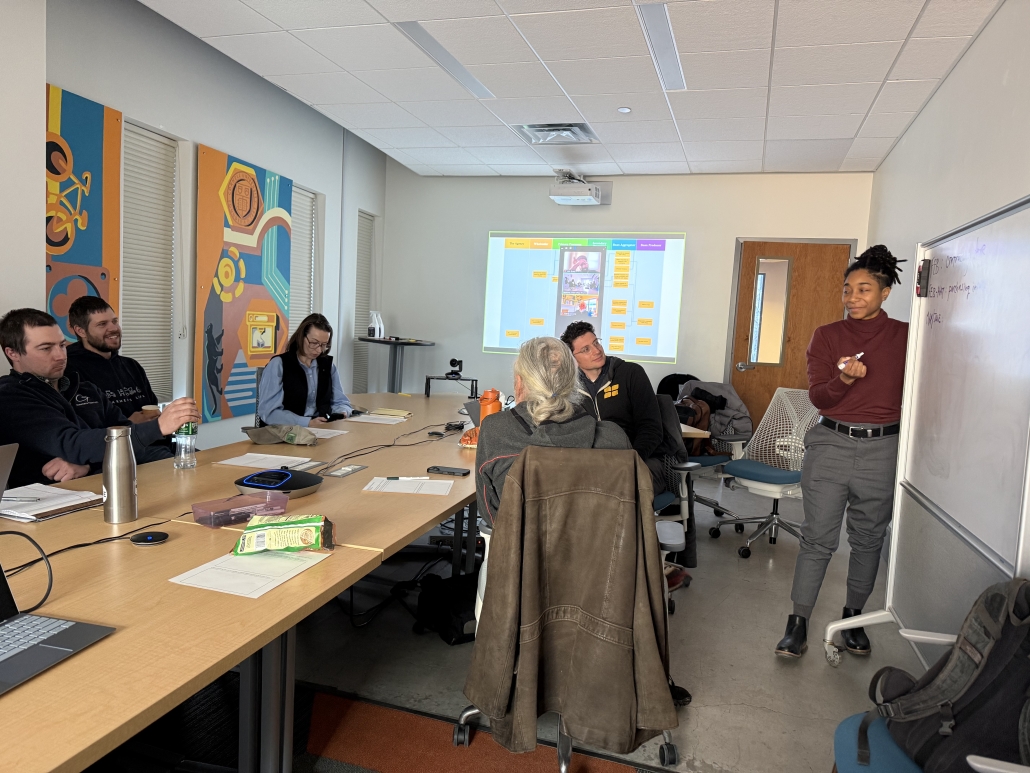
Throughout this project we have worked closely with our producer and supply chain advisory teams to ensure that the model reflects reality. In December, the modeling team presented the dashboard to CFPP dry bean advisors working along the New York State dry bean supply chain advisory committee, including farmers and cleaners and last mile distributors. Hosted at the Rev Ithaca Startup Works, the advisors validated the assumptions driving the model, clarifying decision making determinants and affirming supply and information flows and timing.
The model is designed to capture such nuanced decision making as a farmer choosing not to plant a specific crop in favor of another due to that season’s pricing, which ripples throughout the supply chain. These conversations also highlight the essential role that available processing capacity and strategic infrastructure investment play in VBPFP and in understanding supply chain availability and farmer agency. Our next validation meeting is with NYC agency buyers and contract designers.
The Modeling Team is also integrating New York State beef and cull dairy data into the dashboard and expects to convene a similar advisory discussion this summer. The completed dashboard will be presented through several public forums in the second half of 2026 and hosted on the CFPP website.
Looking Beyond New York
In 2025 the CFPP team and international advisors made progress towards understanding the applicability and potential impact that this research project can have internationally. Three interconnected processes have led to exploration of an international research project, including practitioner interviews during the summer, the “Accelerating Values-Based and Regenerative Food Procurement” workshop last August in Copenhagen, Denmark, and a plenary session during the Milan Urban Food Policy Pact Global Forum in Milan, Italy in October. All three of these processes were greatly assisted by CFPP’s International Advisors.
In the September newsletter we reported on the interviews and the August workshop with five cities from the US, Europe, Latin America and Africa. A final summary report on the workshop can be found here. From both processes we classified current global values-based procurement policy into five types of actions, including: dietary guidelines and menu changes, purchasing requirements, contract preferences, vendor incentives, and infrastructure investments.
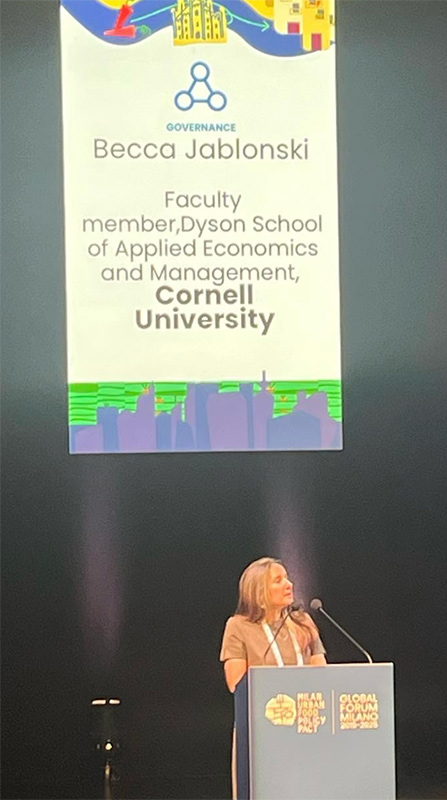
Co-Project Lead, Becca Jablonski, presenting the Governance Awards at the Milan Urban Food Policy Pact Global Forum, Milan, Italy
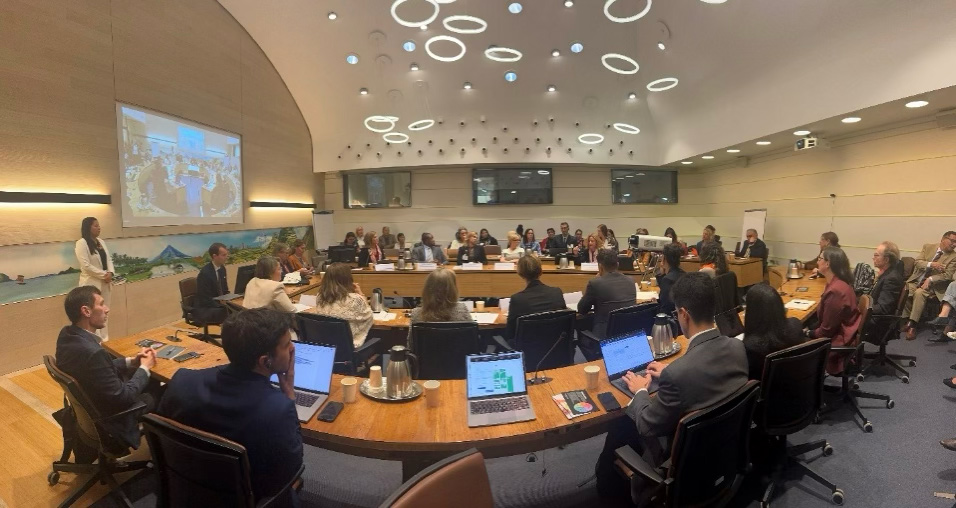
On October 16, 2025, the CFPP team convened a parallel session at the Milan Pact Global Forum titled “Assessing economic, social and environmental impacts of municipal food procurement policies: The role of participatory action research.” The session was co-organized with eleven partners, including city networks, UN agencies, NGOs, and municipalities. Designed as an interactive working session, it highlighted values-based food procurement policies and practices from nine cities: Baltimore (USA), Belo Horizonte and Curitiba (Brazil), Birmingham (UK), Bogor City (Indonesia), La Paz (Bolivia), Liège (Belgium), Mouans-Sartoux (France), and Pemba (Mozambique).
Similar to the findings of the interviews and the Copenhagen meeting described above, results from the parallel session revealed that the policies fit into the actions described above, but that there are important distinctions in values, stakeholder engagement, and research needs. A key commonality was a move beyond cost-only decision-making toward whole food system approaches involving city agencies, farmers, supply chain actors, and civil society. Strengthening local economies and livelihoods emerged as the dominant shared value. Environmental sustainability was emphasized primarily by U.S. and European cities, while social inclusion—particularly the empowerment of smallholder and Indigenous producers, youth, and women farmers and vendors—was central in cities across Africa, Asia, and Latin America.
Cities also identified overlapping and distinct data needs, ranging from supply chain mapping to impact analysis of local economies and unintended tradeoffs. These insights will inform ongoing efforts to assess the transferability of the CFPP research model and to support cities in de-risking the implementation of current and future values-based food procurement policies.
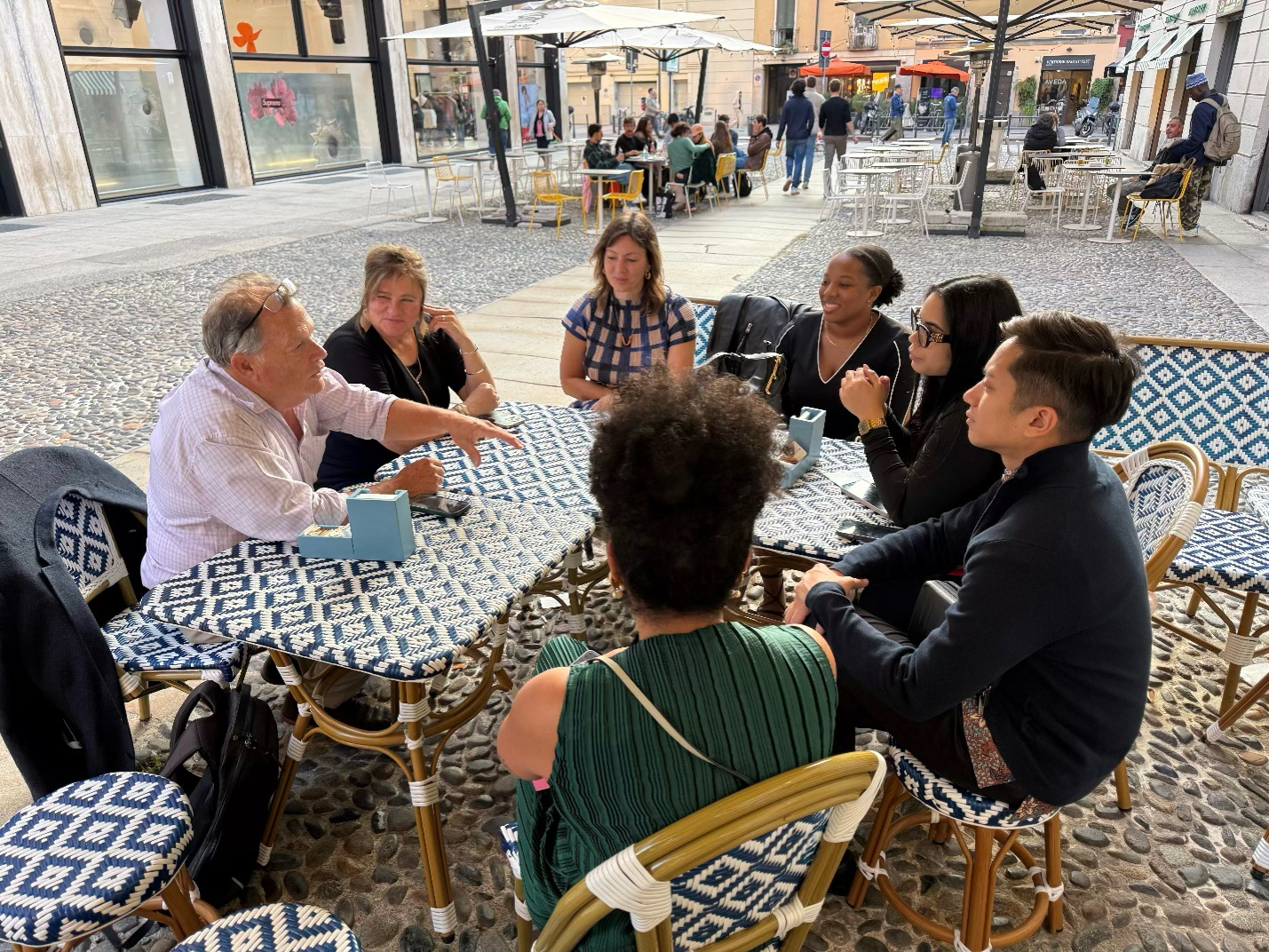
Discussion in Milan between CFPP team members and VBPFP leads from New York, Pemba, and Bogor Cities.
CFPP team members and advisors also participated in meetings in Rome before and after the Milan Pact Forum. These included the third World Farmers Markets Coalition General Assembly, where Becca Jablonski joined a panel exploring existing and potential links between public food procurement and farmers markets. Following the Forum, the 53rd session of the Committee on World Food Security launched the first global policy recommendations focused on strengthening urban and peri-urban food systems to improve food security and nutrition.
These recommendations arrive amid growing international recognition of the role local and subnational governments play in food systems transformation, particularly in response to rising food insecurity, supply chain volatility, climate change, conflict, and trade challenges. The recommendations call for “governments at all levels … to prioritize and invest in nutrition-oriented public and community programs—including school meals, public institution food services, and distribution systems—that make healthy diets accessible and affordable while sourcing locally where possible and promoting sustainable food systems”. The full text is available here.
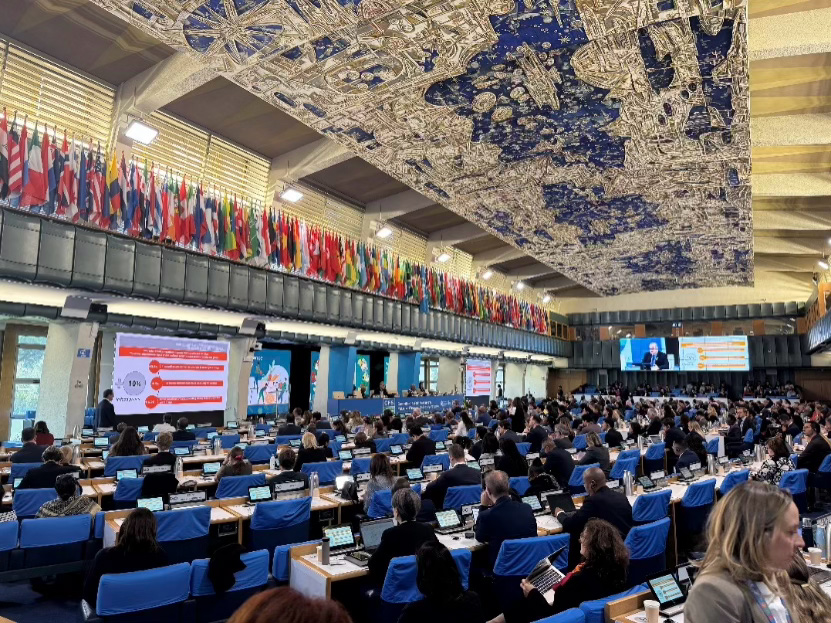
CFS plenary debate on urban and peri-urban food systems
Side event organized by the School Meals Coalition
Where to Find Us
In the coming months the CFPP Team will be sharing its work and participating in conversations that address values-based public food procurement, supply chain development, and urban-rural interdependence.
January 12, 2026
CFPP Project co-lead Becca Jablonski will present NYC purchase data info at the Cornell University Dyson School Agricultural and Food Business Economic Outlook Conference.
February 23, 2026
New York Farm to School Summit 2026, Saratoga Springs, NY: CFPP members and advisors will attend the 2026 NY Farm to School Summit, co-hosted by New York State Education Department and Cornell Cooperative Extension Harvest NY. This highly informative and engaging Summit is for all Farm to School stakeholders including farmers and producers, food service directors, educators, school administrators. Sessions are wide-ranging and suitable for stakeholders just starting out in their Farm to School journeys, and those who have been working in the field for many years.
Project Partner and Dry Bean Liaison June Russell will be attending and presenting at the following convenings:
January 9, 2026
NOFA-NY, Purchase, NY: NOFA-NY’s Winter Conference convenes hundreds of farmers, food system professionals, educators, advocates, homesteaders, and gardeners who are passionate about advancing organic principles that create better food and farming systems. Session/presenting
January 21, 2026
EcoFarm, Pacific Grove, CA: The EcoFarm Conference is one of the largest and longest-running gatherings of sustainable and organic farmers, ranchers, and food system advocates in the U.S. Attending/panel
March 6, 2026
Cornell Organic Field Crops, Waterloo, NY: Hosted by New York Soil Health, the Cornell Organic Field Crops and Dairy Conference serves the organic grain, dairy and livestock farmers of New York State and throughout the region. Listening session/tabling
March 18, 2026
Northern Grain Growers Conference, Essex Junction, VT: Hosted by the University of Vermont Extension Northwest Crops and Soils Program and Northern Grain Growers Collaborative (NGGC), hear presentations from grain growers, bakers, millers, and more. Presenting
In our next What’s New, CFPP will share more developments and learnings from the NYC Dashboard, and the latest from the modeling team and advisors. Follow this link to receive regular updates about CFPP.