Climate Week 2026

The Power of the Public Plate: Health, Climate and the Culinary Workforce

On Thursday, September 24, 2026, The NYC Mayor’s Office of Food Policy and the NYC Health Department hosted The Power of the Public Plate: Health, Climate and the Culinary Workforce, an invitation-only gathering during Climate Week NYC.

New York City runs one of the country’s largest institutional food programs—over $600 million in annual procurement, 220 million meals and snacks a year, across eleven city agencies—providing it the opportunity to make a difference in the food New Yorkers eat. This event brings together city agencies, culinary institutions, research partners, industry, and funders who are focused on transforming meals across NYC to support human and planetary health.

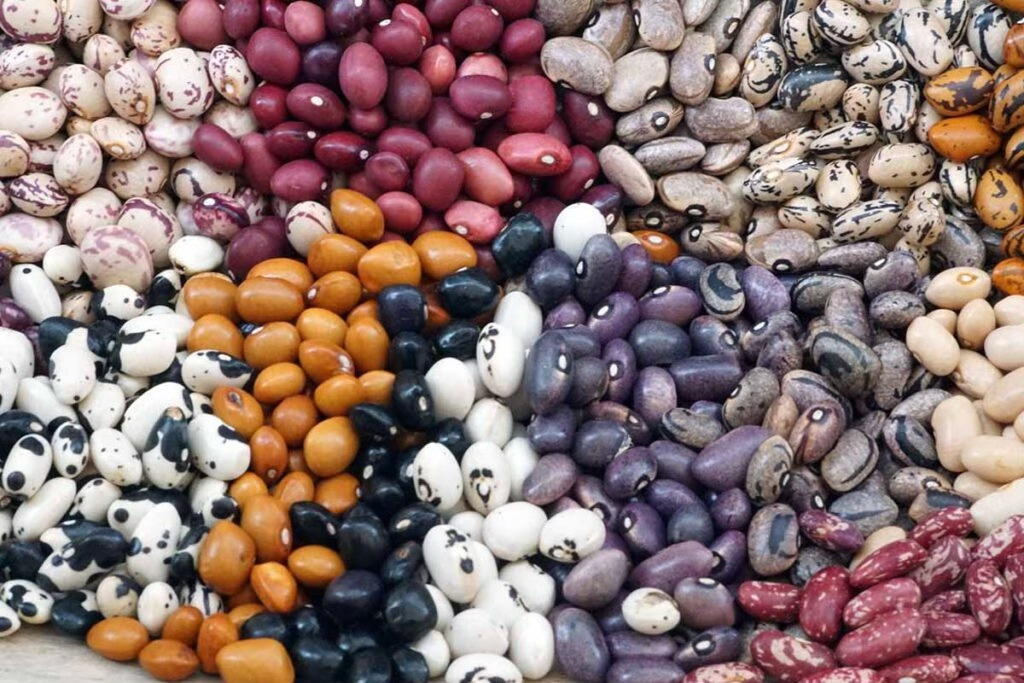
Meet the people taking action across the city’s food system and help shape what comes next. There will be tastings of bean, lentil and pea dishes prepared by NYC agencies followed by an afternoon of panel discussions focused on scaling plant proteins in institutional food service, strengthening the regional supply chain—using City Food Policy Project’s new dashboard, and highlighting the role of beans and pulses in chronic disease prevention.

Climate Week New York City 2026

From Field to Fork

Increasingly, municipalities across the world are recognizing both their capacity and fundamental responsibility to utilize public dollars and local policy to meet global sustainable development goals. However, these policies are not without tradeoffs and the best solutions may require engaging and co-creating programs with key regional actors.

BeansRecognizing the power of a regional approach to local policy, the New York City Department of Environmental Protection has distributed millions in funding to regional farmers in the New York City watershed to support best management practices and conservation easements. In 2021, the New York City Mayor’s Office of Food Policy (NYC MOFP) launched a 10-year food plan, Food Forward NYC, which includes a values-based food procurement initiative to steer the city’s budget of more than $500 million annually in food purchases to New York State vendors. As part of the City Food Policy Project, MOFP is working with upstate producers to also understand how they would respond to different local procurement decisions. In addition, MOFP is working with leaders across local and state government, including the New York State Department of Agriculture and Markets and representatives from the state House and Senate to explore new collaborations and advance shared policy goals.

This panel will spotlight how New York City and State are strategically collaborating with regional partners to support a sustainable, healthful, and resilient food system.

Moderator:

Michael Hurwitz
Michael Hurwitz, Landing Lights Strategies Inc, CFPP Supply Chain and Communications Lead.

Speakers:

Tim McGreevy
USA Pulses

June Russell
Glynwood Center for Regional Food and Farming

SJ Peterson
Farm to School Lead
Cornell Cooperative Extension, HarvestNY

Becca Jablonski
Dyson School of Applied Economics and Management, Cornell University

Hudson Valley Farm Tour

September 25th, 2026

Just north of New York City, Hudson Valley farms and food system partners are helping bring locally grown food to millions of New Yorkers. The City Food Policy Project (CFPP) is hosting an all-day field tour showcasing the innovation, infrastructure, and partnerships that connect New York State producers with City agencies.

The tour will visit three farms and facilities to explore legume and leafy green production, with a focus on the role of smaller farms, organic or regenerative growing practices, and women- and minority-owned businesses in NYC’s food supply chain. Through conversations with growers and partners who are championing New York State agriculture, attendees will gain firsthand insight into the opportunities and challenges shaping values-based food procurement.

Hudson Valley Hops & Grain, Ancram, NY

A 380 acre, certified organic farm operation in Columbia County, growing small grains, dry-beans, oil seeds and buckwheat. In 2021 owner/farmer Stuart Farr constructed a scale appropriate facility with capacity for food grade post harvest handling of a full suite of crops that provide for long term crop rotation. Their locally grown ingredients support the region’s growing craft beverage and food economy, offering breweries, maltsters, and culinary businesses a traceable, terroir-driven alternative to commodity-sourced legumes and grains.

Glynwood Center for Regional Food and Farming, Cold Spring, NY

Glynwood Center for Regional Food and Farming is a nonprofit organization based on a 250-acre campus in Cold Spring, NY, dedicated to conservation and community stewardship, serving hundreds of food and farming changemakers across the Hudson Valley and beyond. In 2025, Glynwood received a RFSI infrastructure award to launch The Granary, providing critically needed aggregation, storage, co-packing, and distribution services for entry-level, small-scale, Certified Organic grain producers. The Granary fills an unmet market gap as a non-commercial-scale distributor capable of successfully marketing small quantities of novel, regionally adapted organic grains to bakers, chefs, and other market-making buyers.

By 2027, The Granary aims to distribute grain from at least 44 regional organic farms to 30 markets. In creating new revenue streams, the project incentivizes farmers to diversify their crop rotations with climate-smart varieties, including winter-hardy cover crops like rye and winter wheat, that are well-adapted to the region.

Chester Agricultural Center, Chester, NY

The Chester Agricultural Center (CAC) conserves more than 284 acres of Orange County’s black dirt, leasing it long-term to farms growing clean, local food through organic practices. In 2024, CAC helped to launch the BQE, a distribution collaborative of 18 first-generation, BIPOC-led small farms across the Hudson Valley and Catskills, united by shared commitments to food access and soil-centered, water-protective land stewardship.

In 2025, building upon previous investments from Empire State Development and NYSERDA, CAC received a resilient food system infrastructure grant with Brooklyn-based Brooklyn Packers to establish a produce aggregation hub, connecting farmers directly to retail and institutional markets. The project transformed an existing structure, removing inefficient refrigeration equipment and expanding cold storage to include newly insulated 38-degree and 60-degree rooms. Site upgrades included a new trench drain, plumbing repairs, a propane heating system, forklift and industrial wash equipment. A pole barn addition is now underway, enclosing an existing loading dock to create additional packing, aggregation and storage space. The hub now enables CAC’s member farmers, as well as area small farms, who hadn’t previously aggregated as a group, to pool 100% NYS-grown products and create middle-of-supply-chain efficiencies, with an estimated capacity of 180,000 pounds of produce per year at project completion.