Workshop on Accelerating Sustainable Food Procurement with Enhanced Understanding of Tradeoffs and Opportunities for Regional Partnerships
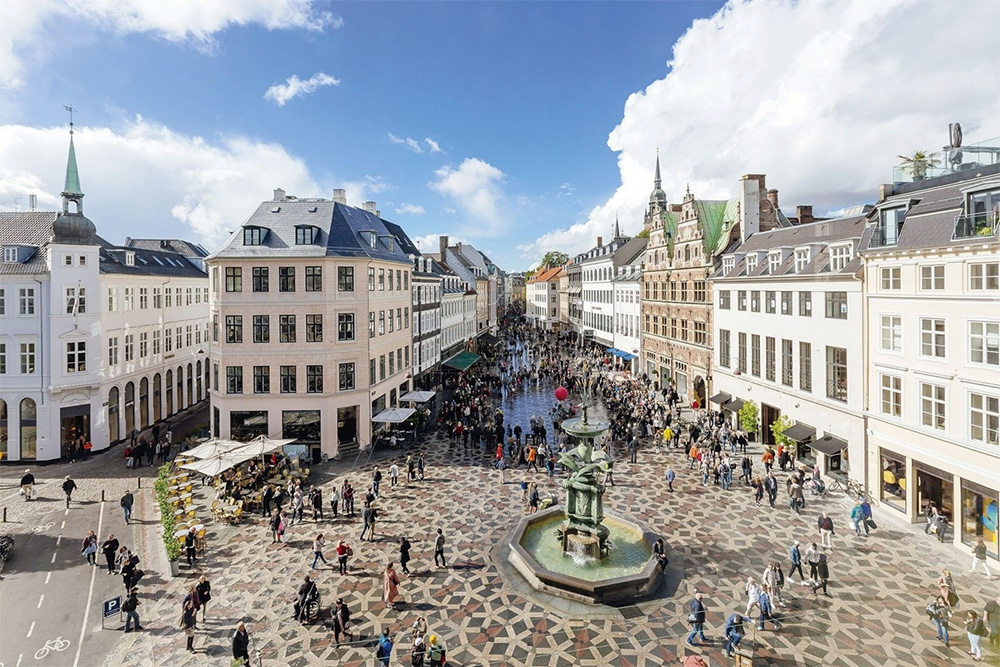
August 2025 in Copenhagen, Denmark
The City Food Policy Project, in partnership with the City of Copenhagen, hosted a one-day workshop on accelerating values-based and regenerative food procurement. Many cities are adopting values-based and regenerative food procurement policies to meet their sustainability goals. However, cities often design and implement policies without adequate information to understand how to predict tradeoffs or co-benefits of values-based public food procurement policies. Part of the reason for this is a lack of key regional relationships and challenges in creating meaningful ongoing stakeholder engagement to understand how and why private sector actors respond to city buying incentives.
The objectives of the workshop were to:
1. Identify specific values-based public food procurement policies and implementation strategies that will be prioritized by cities over the coming three years to determine areas of shared learning opportunities;
2. Compare strategies to engage regional supply chain stakeholders that impact and are impacted by values-based public food procurement;
3. Determine opportunities to extend the modeling efforts of the City Food Policy project to other cities, in order to derisk city food policy through enhanced understanding of tradeoffs and co-benefits;
4. Investigate interest in pursuing future opportunities for collaborate engaged research projects.
The Workshop
The workshop was centered around the experiences of five cities: New York (USA), Nairobi (Kenya), Barcarena (Brazil), Milan (Italy) and Copenhagen (Denmark). In addition to agri-food policy and food procurement officials from these five cities, other participants included researchers, nongovernmental organizations, city network coalitions, and funders (a complete list is attendees is provided in the appendix).
In advance of the workshop, values-based public food procurement or VBPFP was defined as a purchasing model that prioritizes one or more social, environmental or economic values as opposed to the solely considering lowest price when acquiring food for public institutions (schools, hospitals, canteens, etc.). “Values” consider the attributes related to the foods that are purchased and the people who are producing and preparing the foods.
Additionally, prior to the workshop, the project leadership team conducted interviews with 17 city and city-network representatives, CFPP advisors. Interview questions focused on determining commonalities and differences across context, goals, approach, implementation strategy, and mechanisms for stakeholder engagement. Though the interviews revealed important differences across place – particularly in terms of the goals of VBPFP, that there were very similar ways that VBPFP was being implemented across the cities. Based on this, we were able to classify five types of VBPFP policy actions taken across the cities (which were reconfirmed in the workshop). These include:
dietary guidelines and menu changes,
purchasing requirements,
contract preferences,
vendor incentives, and
infrastructure investments (soft and hard).
In order to advance the first two workshop objectives, we centered a series of interactive breakout sessions on a specific city and its planned policies for the next three years—participants worked to identify the goals of these policy actions and to map the processes through which benefits or impacts are expected to occur. In other words, when a city implements a VBPFP policy, participants anticipate ripple effects across the supply chain, extending to eaters, private sector actors, farmers, environments, and communities. By making these “impact pathways” explicit, the sessions created opportunities for workshop participants to provide feedback on the assumptions underlying these pathways and to highlight what information is needed to assess whether they hold true. The “impact pathways” also revealed important linkages and connections across rural and urban stakeholders within a region. Accordingly, the workshop devoted attention to understanding how different cities, city networks, and coalitions engage regional stakeholders, and what else could be done. Summaries of the four sessions focused on the VBPFP policies, implementation pathways and research needs of each of the five cities are included as appendices.
To support the final two workshop objectives, presentations were given by large-scale recently completed interdisciplinary projects focused on VBPFP around the world. Those efforts include ongoing work led by the Milan Urban Food Policy Pact Secretariat, School Food 4 Change led by ICLEI, FoodTrails led by the Milan Urban Food Policy Pact Secretariat, work led by the Global Alliance for Improved Nutrition (GAIN), and the CFPP. The presentations highlighted what worked from these efforts that could be leveraged in future projects and what gaps remain to derisk future VBPFP investment.
Subsequently, participants returned to breakouts to explore the design of a future project on VBPFP that maximizes the potential of each city’s ability to achieve its end goals, derisking future investments. In addition to returning to the specific goals and food policy actions and process to achieve the goals, groups were asked to identify knowledge gaps, who needs to be involved and their roles. Workshop findings revealed substantial interest in leveraging the approach of the CFPP to engage cities. Members of the workshop are currently putting together proposals to support future collaborations.